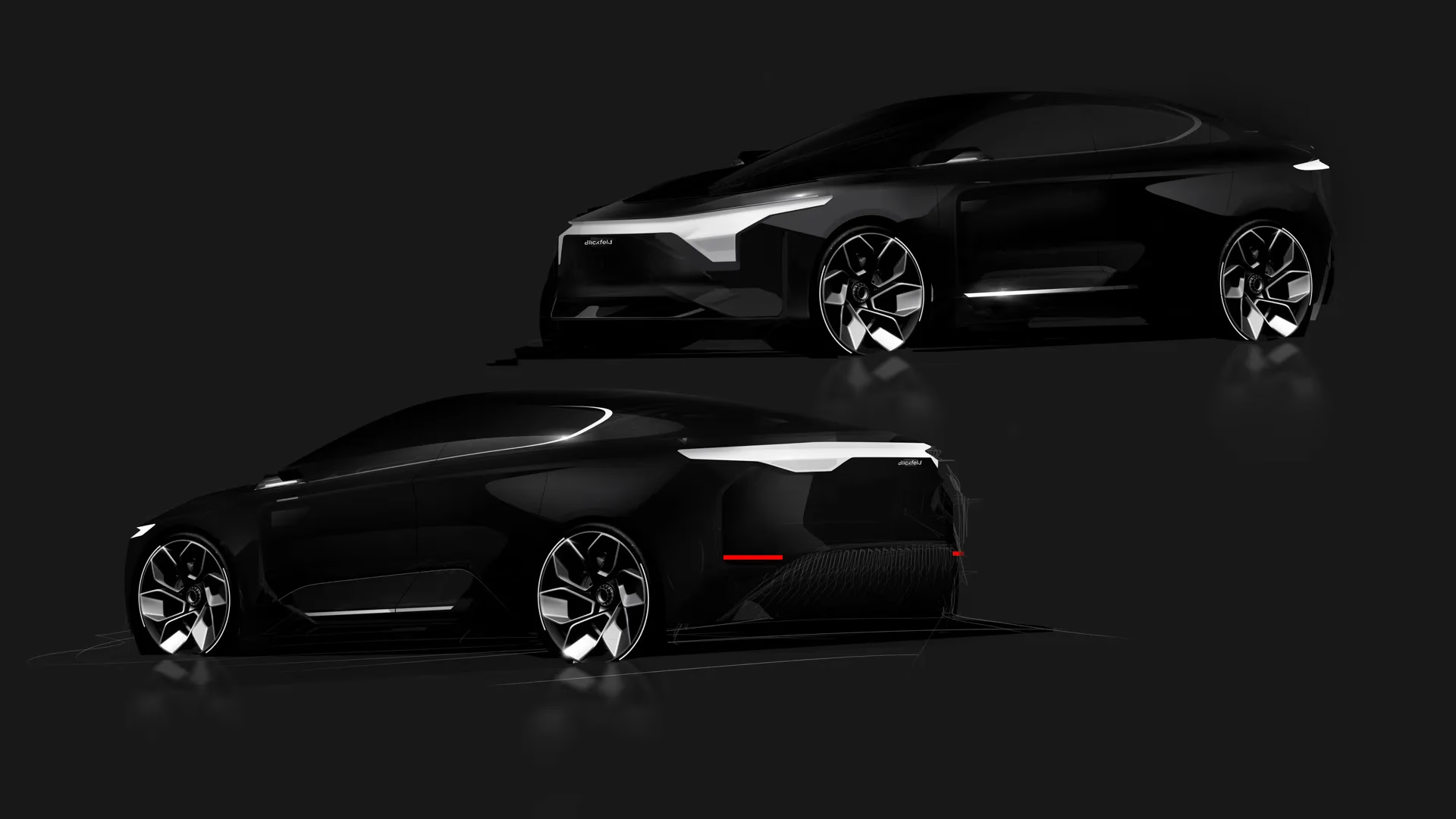
Vehicle design is one of the most complex disciplines in automotive development — and one of the most consequential. A car is designed years before it reaches a showroom, which means automotive designers must not only anticipate technical requirements but also predict emotional ones: what will move people, not just transport them.
The gap between a vehicle that sells and one that dominates its segment is rarely measured in horsepower or price. It is measured in desire. And desire is the result of deliberate, strategic design thinking.
Great automotive design does not follow trends — it creates them. It begins with an emotional spark and builds outward from there.
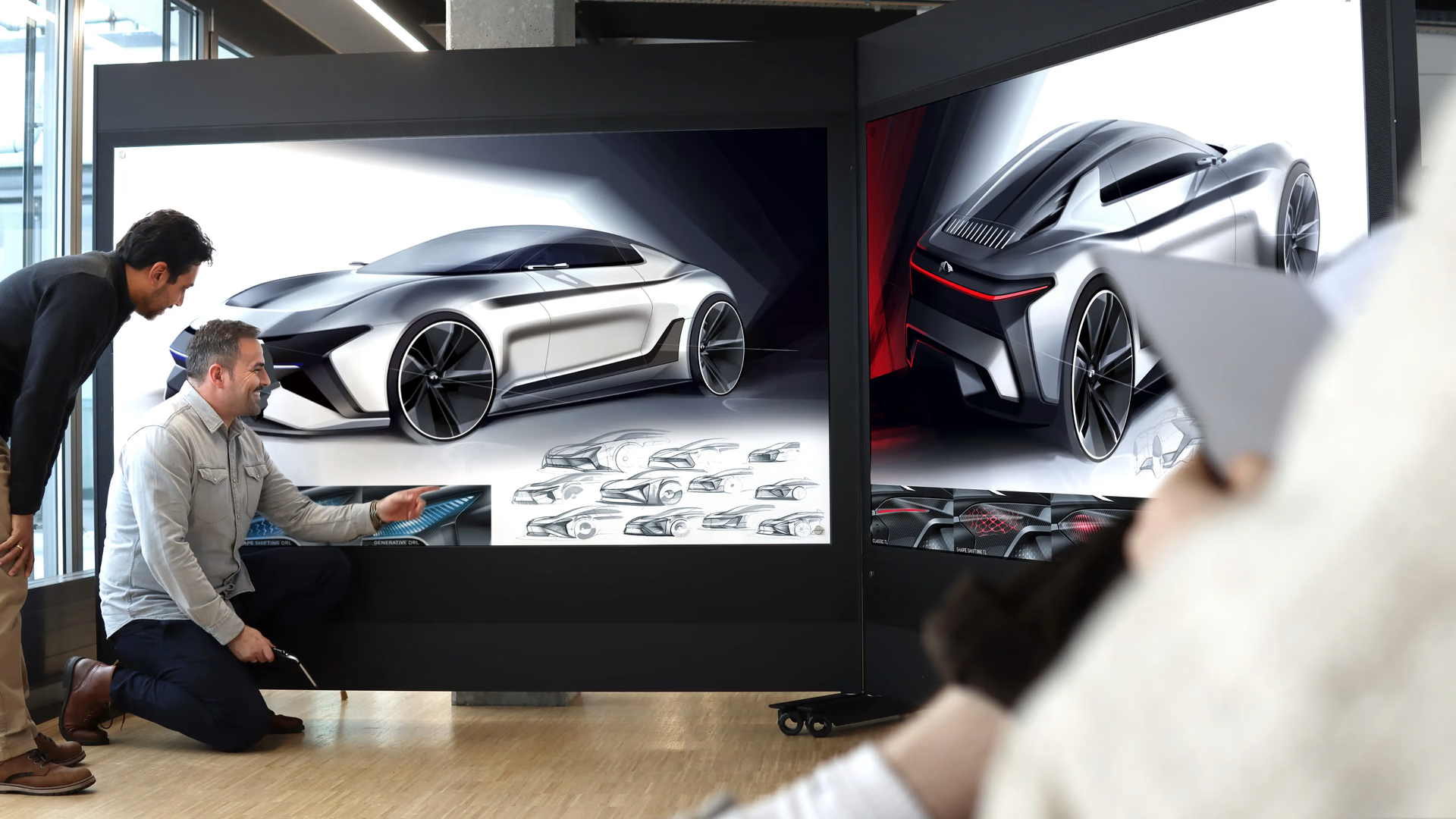
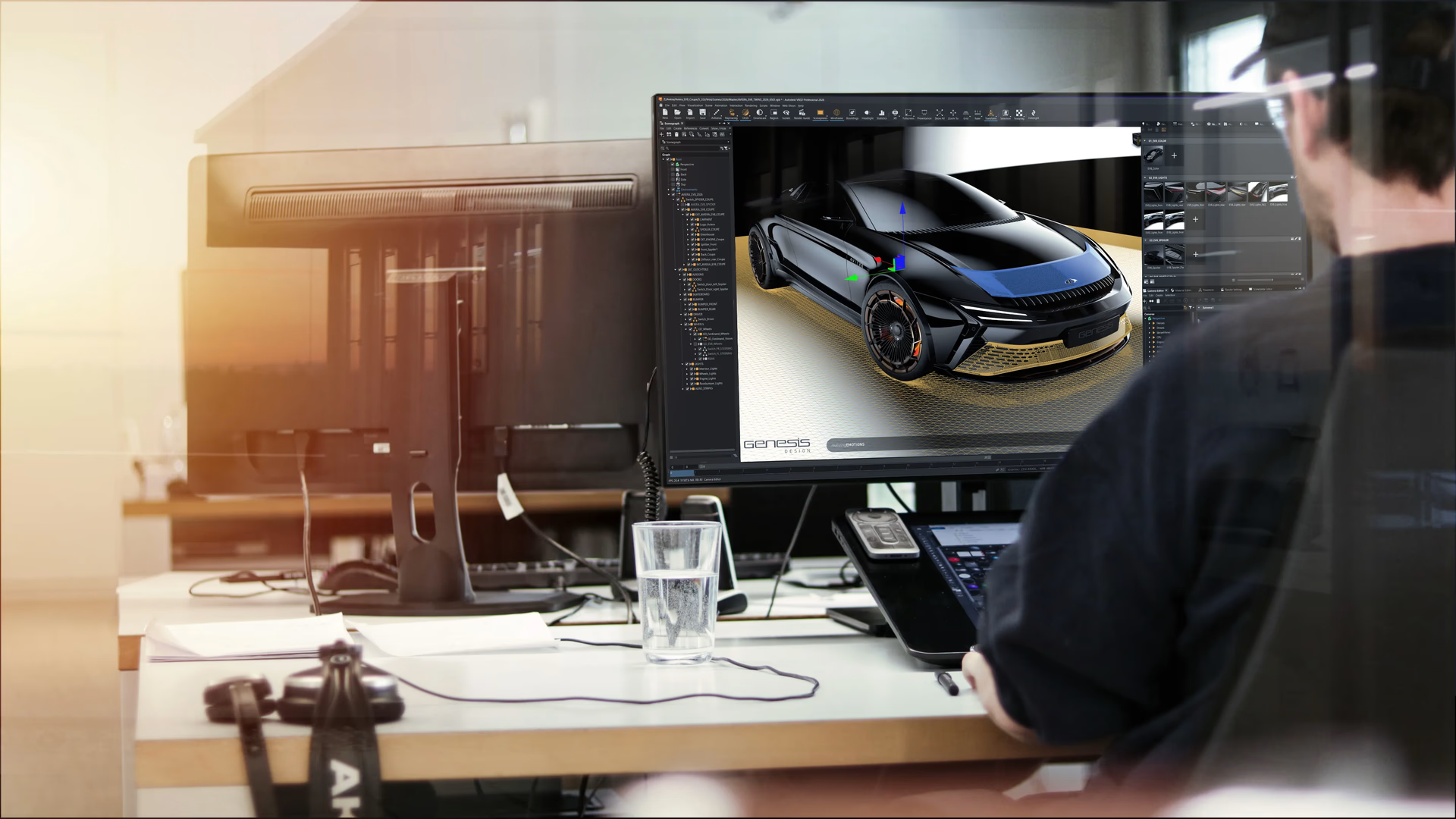
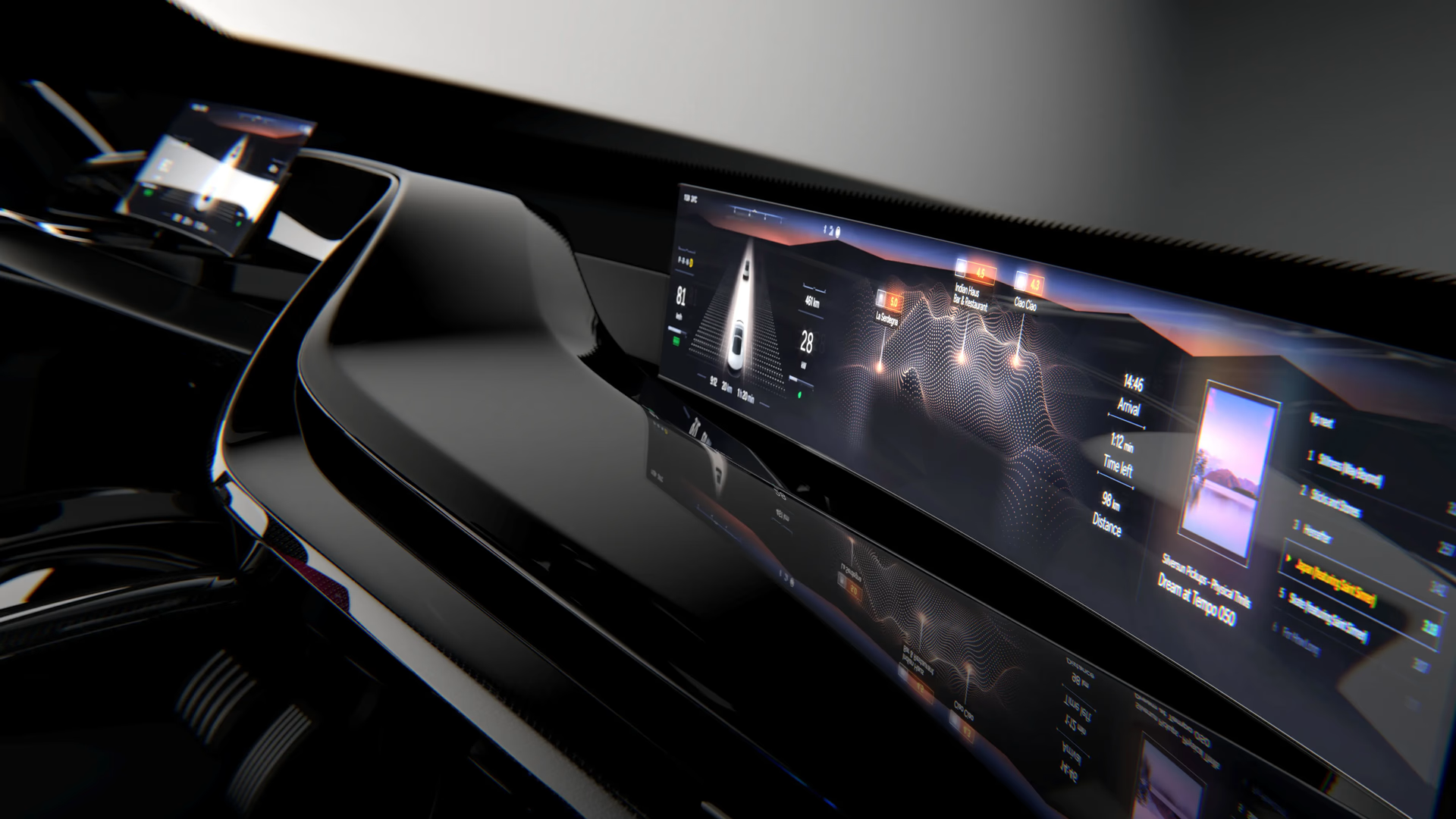
A vehicle designed for the global market is never designed for everyone equally. Customers in China, Northern Europe and the United States bring fundamentally different aesthetic sensibilities, status signals and emotional associations to the showroom. Premium automotive design anticipates these differences not by averaging them out — but by building a design identity strong enough to resonate authentically in each context.
This requires market research that goes far beyond specification sheets. It requires cultural empathy: understanding not just what customers say they want, but what they respond to before they can articulate why. The most successful global vehicles carry a design language that feels locally relevant while remaining unmistakably singular.
In automotive exterior design, every geometric decision carries meaning. Symmetry communicates harmony and trustworthiness. Asymmetry signals dynamism and individuality. Horizontal lines suggest stability and calm; diagonal lines imply motion and energy. These are not aesthetic choices made in isolation — they are a visual language that speaks directly to the customer’s subconscious.
A premium saloon and a performance coupe can share identical powertrains and arrive at completely different emotional responses in the buyer — purely through the decisions made in surface development, proportion and detailing. This is why Class-A surfacing is not a technical finishing step: it is the moment where strategic intent becomes physical reality.
Understanding this language — and deploying it with precision across every touchpoint from the grille to the tail-light signature — is what separates a competent automotive design studio from one that genuinely moves markets.
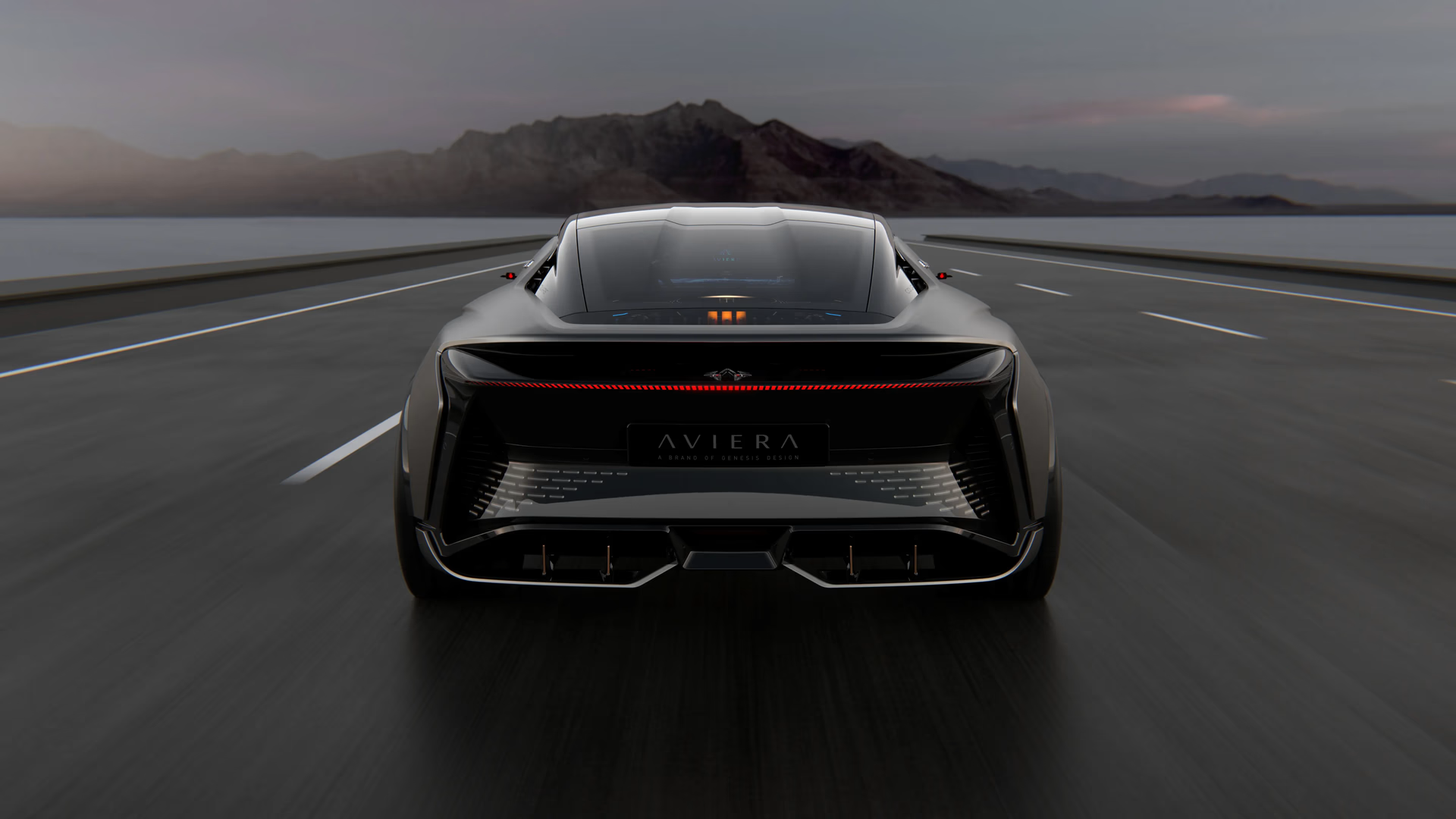
The most enduring design proportions are not invented — they are observed. The Golden Ratio and Fibonacci sequences appear throughout nature precisely because they reflect patterns the human eye perceives as harmonious without conscious analysis. Automotive designers who understand and apply these proportions create vehicles that feel intuitively right — not because the customer can explain why, but because the geometry speaks a language older than automotive culture itself.
This does not mean copying nature. It means understanding the underlying logic of proportion and rhythm that makes a form feel complete. Applied to vehicle exterior design — to the arc of a roofline, the stance of a wheel arch, the flow of a character line — these principles produce designs that hold their appeal across generations. They age well because they were never chasing a trend in the first place.
The future of mobility will not be decided by battery chemistry or charging speed alone. It will be decided by which brands succeed in making their technology feel like something worth desiring — and which fail to bridge the gap between engineering excellence and emotional resonance.
Vehicle design is the bridge. And it requires the same rigour, the same strategic intent and the same commitment to craft that goes into the engineering beneath the surface. At Genesis Design, as an automotive design studio in Munich trusted by BMW, Porsche and Airbus, that is precisely what every project delivers: design that performs on every level — technically, commercially and emotionally.
The Aviera EV8 Spyder is one expression of that vision. The next one could be yours.
Explore the Mobility Studio →
Get in touch: kontakt@genesis-design.de · +49 8131 299 333 0
About the Author: Marco Fanari is Head of New Business & Marketing at Genesis Design GmbH, Munich-Dachau. With a background spanning automotive retail and brand strategy, he leads the studio’s client development across the Marine, Mobility and Product Studios.
Vehicle design is one of the most complex disciplines in automotive development — and one of the most consequential. A car is designed years before it reaches a showroom, which means automotive designers must not only anticipate technical requirements but also predict emotional ones: what will move people, not just transport them.
The gap between a vehicle that sells and one that dominates its segment is rarely measured in horsepower or price. It is measured in desire. And desire is the result of deliberate, strategic design thinking.
Great automotive design does not follow trends — it creates them. It begins with an emotional spark and builds outward from there.
The most enduring automotive designs share one quality: they feel inevitable. Not because they are simple, but because every surface, proportion and detail seems to belong exactly where it is. This sense of coherence is not accidental — it is the result of a design process that balances emotional intent with engineering discipline from the very first sketch.
Tastes differ across generations and geographies. What creates desire in one market can feel foreign in another. Yet the most successful vehicle designs transcend regional preference by grounding themselves in something more universal: a concept that feels seamless, authentic and emotionally complete.
The challenge for every automotive design studio is to identify that emotional core — and then build a design language precise enough to communicate it across every angle, every material choice and every lighting condition.
A vehicle designed for the global market is never designed for everyone equally. Customers in China, Northern Europe and the United States bring fundamentally different aesthetic sensibilities, status signals and emotional associations to the showroom. Premium automotive design anticipates these differences not by averaging them out — but by building a design identity strong enough to resonate authentically in each context.
This requires market research that goes far beyond specification sheets. It requires cultural empathy: understanding not just what customers say they want, but what they respond to before they can articulate why. The most successful global vehicles carry a design language that feels locally relevant while remaining unmistakably singular.
In automotive exterior design, every geometric decision carries meaning. Symmetry communicates harmony and trustworthiness. Asymmetry signals dynamism and individuality. Horizontal lines suggest stability and calm; diagonal lines imply motion and energy. These are not aesthetic choices made in isolation — they are a visual language that speaks directly to the customer’s subconscious.
A premium saloon and a performance coupe can share identical powertrains and arrive at completely different emotional responses in the buyer — purely through the decisions made in surface development, proportion and detailing. This is why Class-A surfacing is not a technical finishing step: it is the moment where strategic intent becomes physical reality.
Understanding this language — and deploying it with precision across every touchpoint from the grille to the tail-light signature — is what separates a competent automotive design studio from one that genuinely moves markets.
The most enduring design proportions are not invented — they are observed. The Golden Ratio and Fibonacci sequences appear throughout nature precisely because they reflect patterns the human eye perceives as harmonious without conscious analysis. Automotive designers who understand and apply these proportions create vehicles that feel intuitively right — not because the customer can explain why, but because the geometry speaks a language older than automotive culture itself.
This does not mean copying nature. It means understanding the underlying logic of proportion and rhythm that makes a form feel complete. Applied to vehicle exterior design — to the arc of a roofline, the stance of a wheel arch, the flow of a character line — these principles produce designs that hold their appeal across generations. They age well because they were never chasing a trend in the first place.
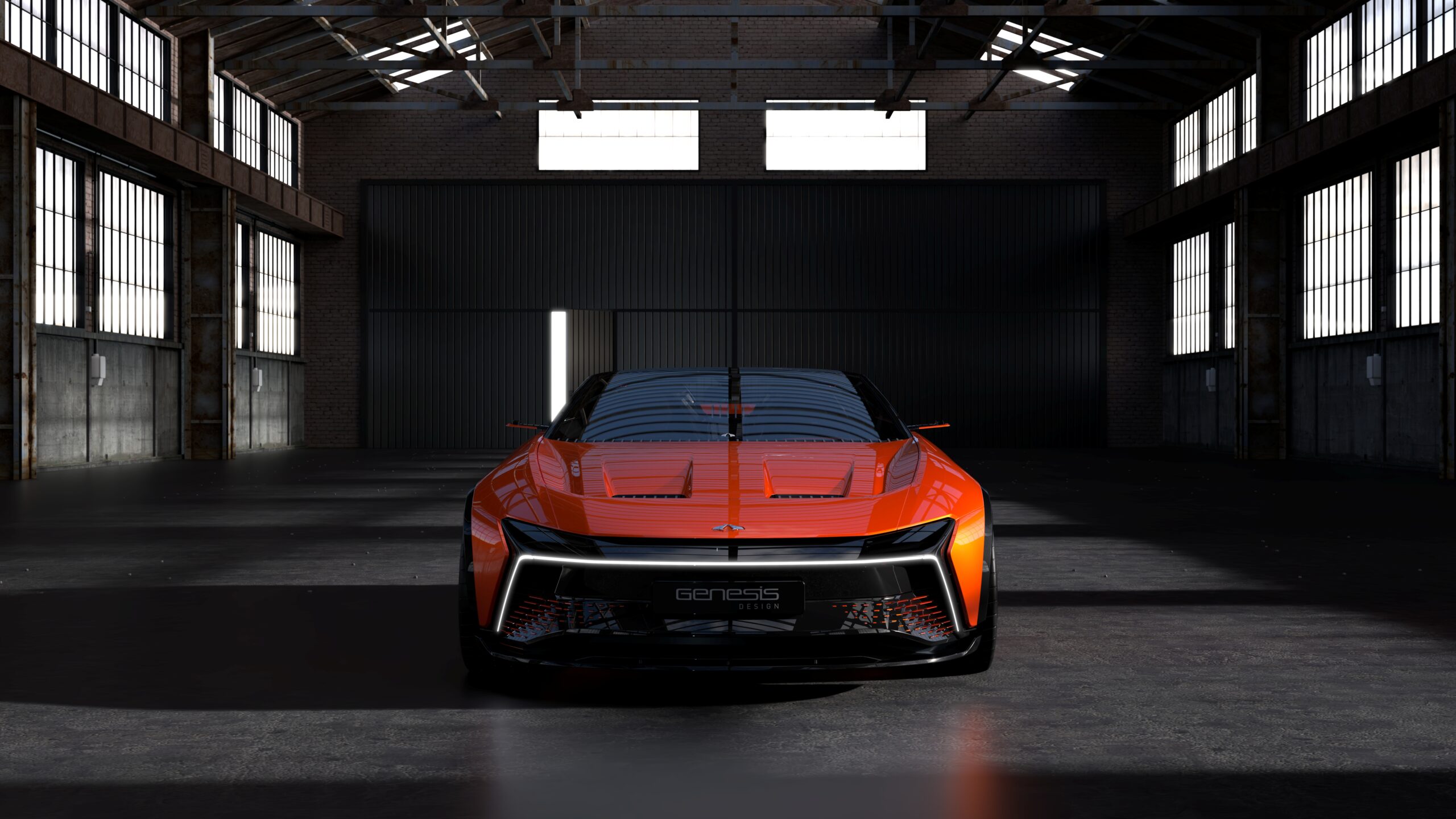
The Genesis Design Aviera EV8 Spyder is a direct expression of these principles applied to the challenge of electric vehicle design. This open two-seater does not attempt to reconcile classic performance emotion with modern electric mobility by hiding the tension between them. It resolves it — by making the technology itself the spectacle.
Where most EV designs conceal their high-performance components behind surfaces borrowed from the internal combustion era, the EV8 Spyder does the opposite. Its high-performance capacitors are deliberately showcased, turning engineering into an aesthetic statement. The message is clear: this vehicle is not an ICE car adapted for electric power. It is a new species — and it looks exactly like one.
Sharp geometries, contrasting surface treatments and precisely resolved light edges create what can only be described as visual energy. The EV8 Spyder feels fast standing still. It feels futuristic without feeling cold — because every technical element has been integrated into a design language that is as emotionally considered as it is technically ambitious.
Instead of concealing technology, the EV8 Spyder showcases it — turning engineering into the aesthetic centrepiece of the design.
This approach — using automotive design to transform engineering intent into emotional experience — is at the core of what the Genesis Design Mobility Studio delivers for its clients. Whether the brief calls for a luxury saloon, a performance coupe or a next-generation electric vehicle, the methodology is the same: understand the emotional promise the vehicle must make, then build every surface to deliver it.
The future of mobility will not be decided by battery chemistry or charging speed alone. It will be decided by which brands succeed in making their technology feel like something worth desiring — and which fail to bridge the gap between engineering excellence and emotional resonance.
Vehicle design is the bridge. And it requires the same rigour, the same strategic intent and the same commitment to craft that goes into the engineering beneath the surface. At Genesis Design, as an automotive design studio in Munich trusted by BMW, Porsche and Airbus, that is precisely what every project delivers: design that performs on every level — technically, commercially and emotionally.
The Aviera EV8 Spyder is one expression of that vision. The next one could be yours.
Explore the Mobility Studio →
Get in touch: kontakt@genesis-design.de · +49 8131 299 333 0
About the Author: Marco Fanari is Head of New Business & Marketing at Genesis Design GmbH, Munich-Dachau. With a background spanning automotive retail and brand strategy, he leads the studio’s client development across the Marine, Mobility and Product Studios.